
Disclosure: As an Amazon Associate, Wattovia earns from qualifying purchases. We research published specifications — we don’t run lab tests, and every number below comes from the manufacturer’s own spec sheet.
Picking a portable power station mostly comes down to two numbers: watt-hours (Wh), which is how much energy the battery holds, and watts (W), which is how much power it can deliver at once. Get those two right and everything else — ports, weight, solar input — falls into place. Get them wrong and you either run out of juice at 2 a.m. or pay for capacity you’ll never use.
This guide walks through the actual math, with real models and real numbers, so you can size a station for your gear instead of guessing.
Watt-hours vs. watts: the 30-second version
Think of it like a water tank. Watt-hours are the size of the tank — a 1,000Wh station holds roughly twice the energy of a 500Wh one. Watts are the width of the pipe — a 1,800W inverter can run bigger appliances than a 600W one, regardless of tank size.
A station with a huge battery but a small inverter can run a phone charger for days but can’t start a power tool. A station with a big inverter but a small battery can run that tool — briefly. You need both numbers to match your use case.
The runtime formula (the only math you need)
For any device, estimated runtime is:
Runtime (hours) ≈ (Station Wh × 0.85) ÷ Device watts
The 0.85 accounts for inverter losses — converting stored DC power to household AC isn’t perfectly efficient, and no manufacturer publishes a single efficiency figure that covers every load. Using 85% keeps estimates honest instead of optimistic.
A few worked examples with a 1,000Wh-class station:
- CPAP machine (~40W, no heated humidifier): (1,000 × 0.85) ÷ 40 ≈ 21 hours — about two to three nights, depending on your pressure settings.
- 12V camping fridge (~45W average, compressor cycling): (1,000 × 0.85) ÷ 45 ≈ 19 hours of compressor-on time, which typically stretches across a full day and night since the compressor cycles.
- Laptop (~60W while working): (1,000 × 0.85) ÷ 60 ≈ 14 hours.
- Smartphone (~12Wh per full charge): roughly 70 charges — at this point the battery, not the math, is the constraint.
Try it with your own gear: check the wattage on each device’s label or power brick, add up what runs simultaneously, and plug the numbers in. Our homepage calculator does this arithmetic for you if you’d rather not do it by hand.
The watts side: can it even start your device?
Capacity means nothing if the inverter can’t handle the load. Check the continuous output rating against your hungriest device, and leave headroom — motors and compressors draw a brief surge at startup that’s often 2–3× their running watts.
Published examples from current spec sheets:
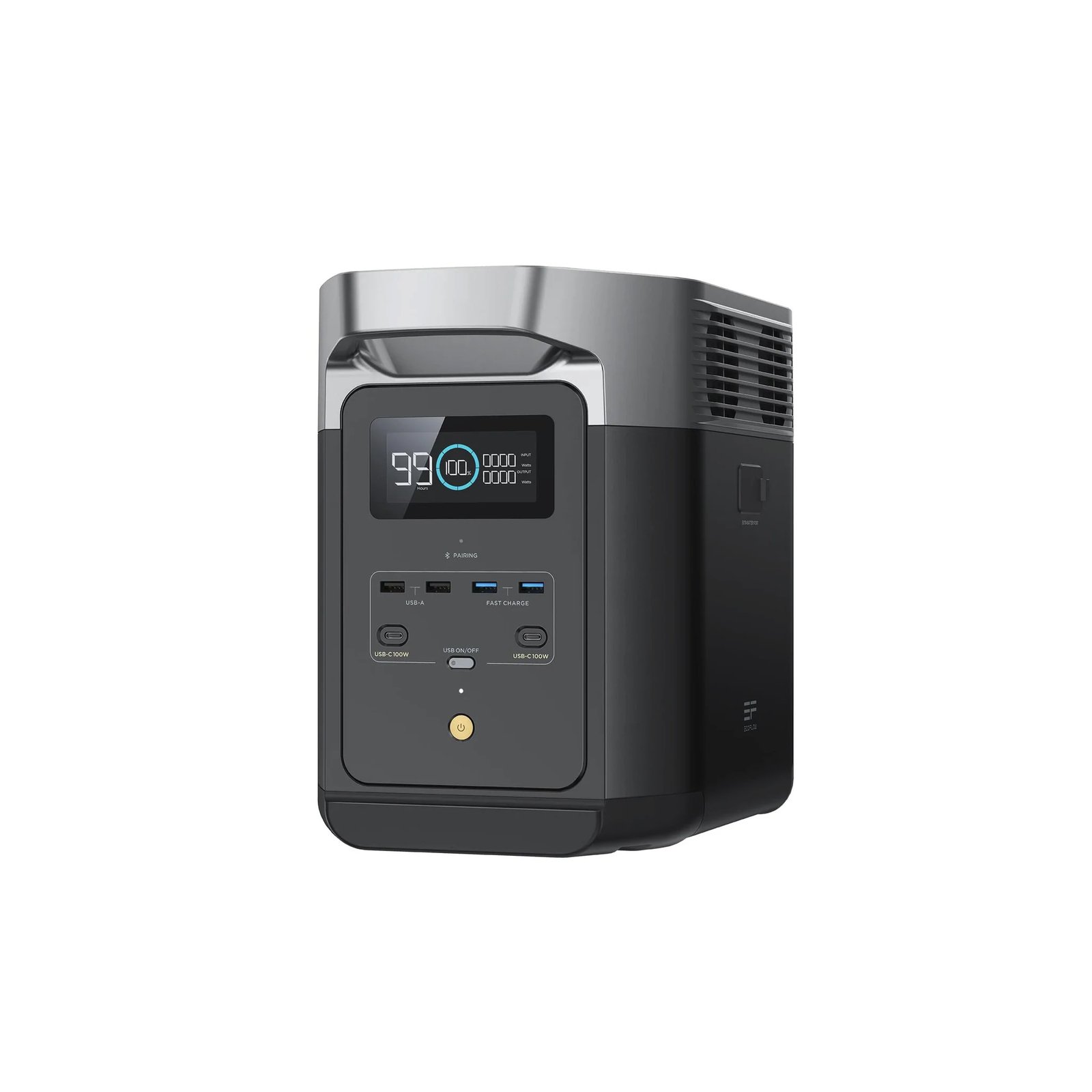
- EcoFlow DELTA 2: 1,024Wh, 1,800W continuous (2,700W surge). Runs most household appliances short of central air.
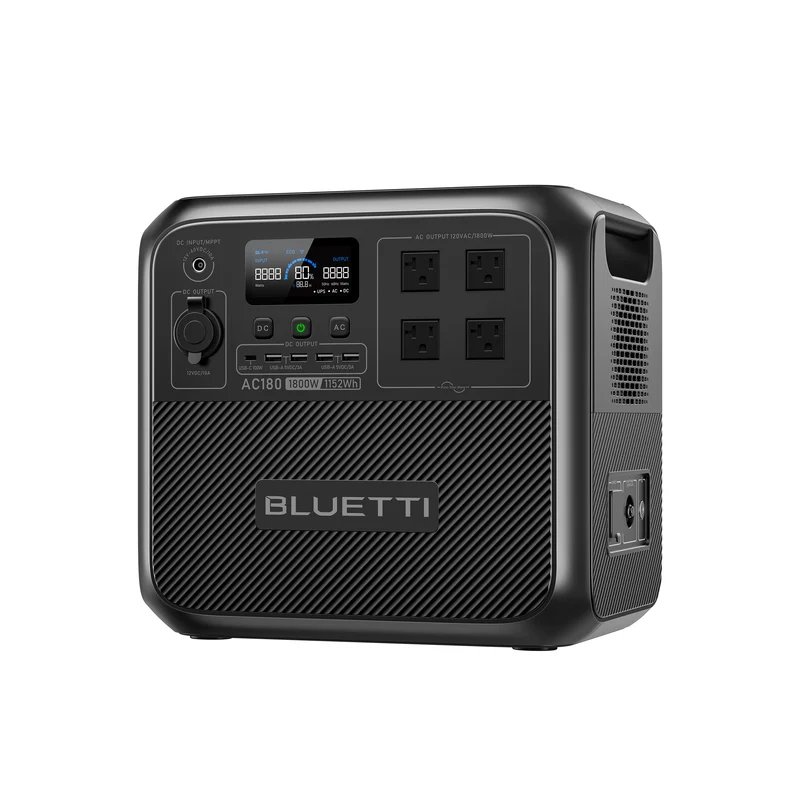
- BLUETTI AC180: 1,152Wh, 1,800W continuous (2,700W surge). Same class as the DELTA 2, slightly larger tank.
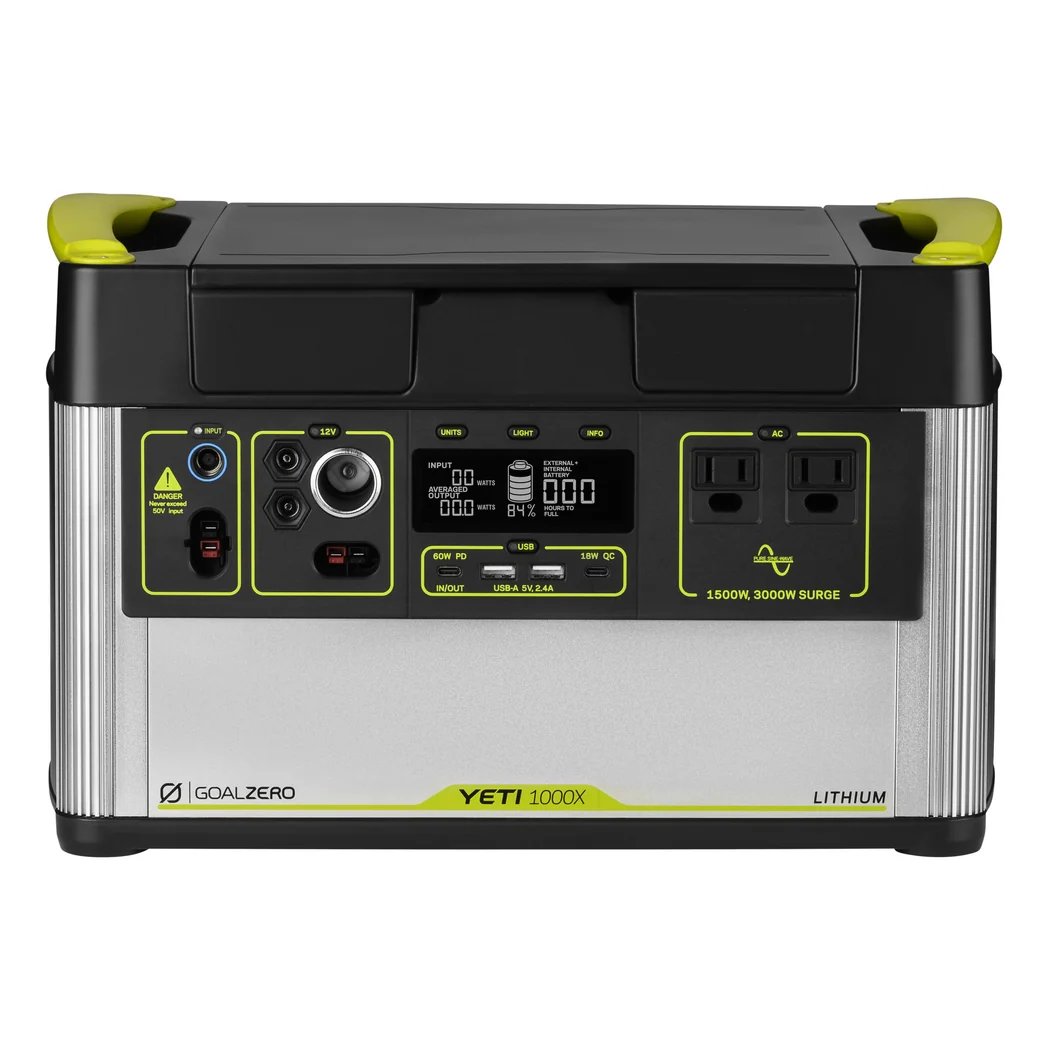
- Goal Zero Yeti 1000X: 983Wh, 1,500W continuous (3,000W surge). A step down in continuous output, generous surge headroom.
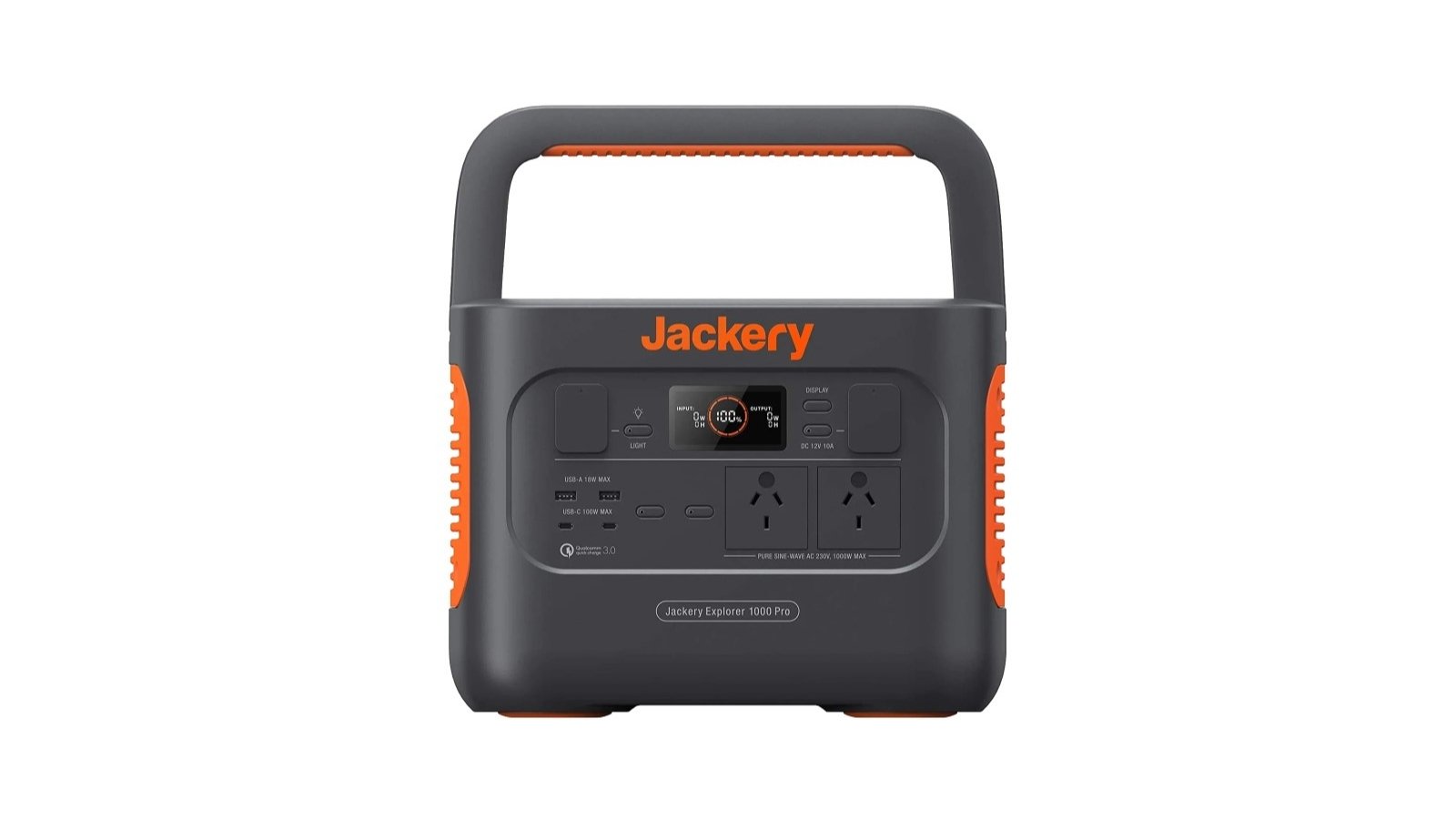
- Jackery Explorer 1000 Pro: 1,002Wh, 1,000W continuous (2,000W peak). Fine for electronics and small appliances; not a power-tool station.
Notice the Jackery holds roughly the same energy as the others (~1,000Wh) but delivers far less instantaneous power. That’s the tank-vs-pipe distinction in the wild — and it’s why “1,000Wh” alone tells you almost nothing about what a station can run.
Sizing tiers: what each capacity class is actually for
~300Wh: personal electronics
Phones, tablets, cameras, a laptop or two. Enough for a weekend of light use. These are the lightest stations — often under 8 lb — and the easiest to carry.
~500Wh: a day of real work
Add a full laptop workday, a CPAP night, or a small 12V fridge for a day trip. This is the sweet spot for car camping if you’re not running anything with a heating element.
~1,000Wh: the versatile middle
The most popular class for a reason. Runs a mini fridge overnight, powers tools on a job site, or keeps home essentials (router, phones, a lamp, a CPAP) going through an outage. Every example in this guide sits in this band.
2,000Wh and up: home backup territory
Refrigerators, sump pumps, extended outages. These get heavy (50+ lb) and expensive — only buy here if you’ve done the math and the 1,000Wh class genuinely falls short.
Three mistakes that waste money
1. Buying watts you can’t use. A 2,000W inverter is pointless if your biggest device is a 65W laptop. Match the inverter to your actual loads.
2. Ignoring surge. The flip side: a fridge that runs at 150W might surge to 600W+ when the compressor kicks on. If the surge exceeds the station’s peak rating, it shuts off — even though the “running” math looked fine.
3. Forgetting recharge. Capacity is only half the equation off-grid. A 1,000Wh station with a 100W solar input takes ~10+ hours of good sun to refill. Check the solar input specs before assuming you can cycle it daily — our solar pairing guide covers the voltage and wattage limits that actually govern recharge speed.
How battery chemistry factors in
Two stations with identical Wh and W ratings can still differ in how long they last as products. Lithium iron phosphate (LiFePO4) cells are typically rated for 3,000+ charge cycles to 80% capacity — the DELTA 2 and AC180 both publish figures in that range. Older nickel-manganese-cobalt (NMC) designs like the Yeti 1000X are rated around 500 cycles. If you’ll cycle the station daily, chemistry matters more than the Wh number. We break this down fully in our LiFePO4 vs NMC explainer.
The bottom line
List your devices, note each one’s watts, estimate hours per day, and run the formula. Buy the smallest station whose continuous watts cover your biggest simultaneous load and whose watt-hours cover your daily energy total — then add ~20% margin for the days you misjudged. For most campers and outage-preppers, that lands squarely in the 1,000Wh / 1,500W+ class.
1 thought on “What Size Power Station Do You Need? The Watt-Hour Math, Explained”
Comments are closed.