
Disclosure: As an Amazon Associate, Wattovia earns from qualifying purchases. We research published specifications — we don’t run lab tests, and every number below comes from the manufacturer’s own spec sheet.
Open any power station spec sheet and you’ll find a line about battery chemistry — usually “LiFePO4” or “lithium-ion.” It reads like fine print. It isn’t. The chemistry inside the battery is the single biggest predictor of how many years a power station stays useful, and manufacturers’ published cycle ratings differ by a factor of six or more.
Here’s what those terms actually mean, what changes in practice, and which current models use which.
The two chemistries, in plain terms
LiFePO4 (lithium iron phosphate, often shortened to LFP) is the newer standard for portable power stations. Its headline trait is longevity: manufacturers typically rate LiFePO4 packs for 3,000–3,500 full charge cycles before capacity drops to 80% of original.
NMC (nickel manganese cobalt) is the chemistry behind most older power stations and, notably, most electric vehicles. It packs more energy per pound — which is why EVs use it — but its published cycle ratings in power stations are far lower, typically 500–1,000 cycles to 80%.
Some spec sheets just say “lithium-ion” without naming the cathode. The Jackery Explorer 1000 Pro, for example, lists “lithium-ion battery” with a 1,000-cycle rating — consistent with an NMC-family cell, though Jackery doesn’t spell it out. When a sheet is vague, the cycle rating is the honest signal: ~500–1,000 means NMC-class longevity; ~3,000+ means LiFePO4.
Cycle life: the number that matters most
A “cycle” is one full charge and discharge. The published ratings, straight from manufacturer spec pages:
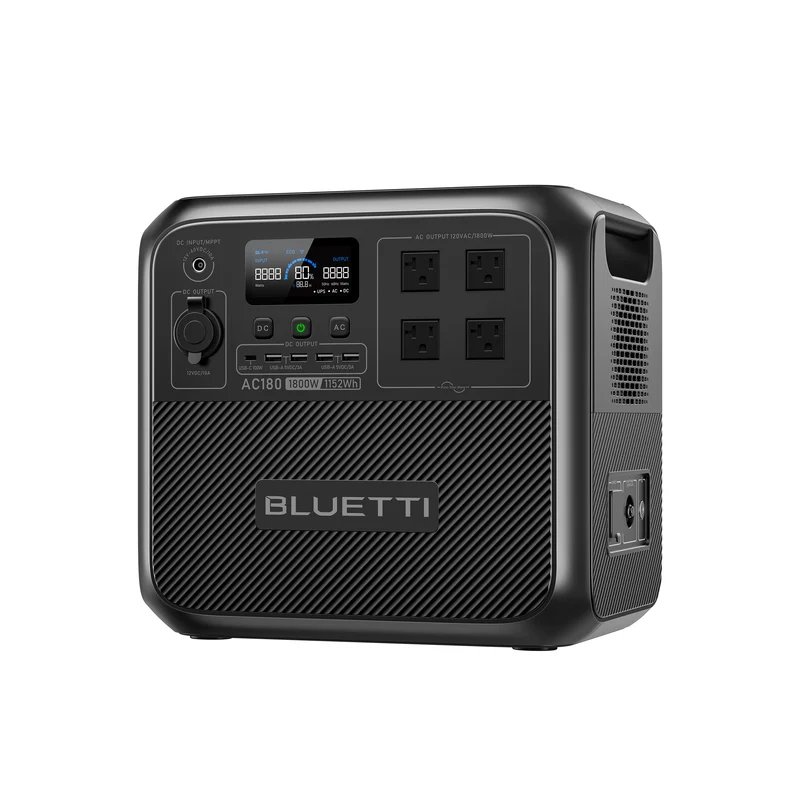
- BLUETTI AC180: LiFePO4, 3,500+ cycles to 80% capacity
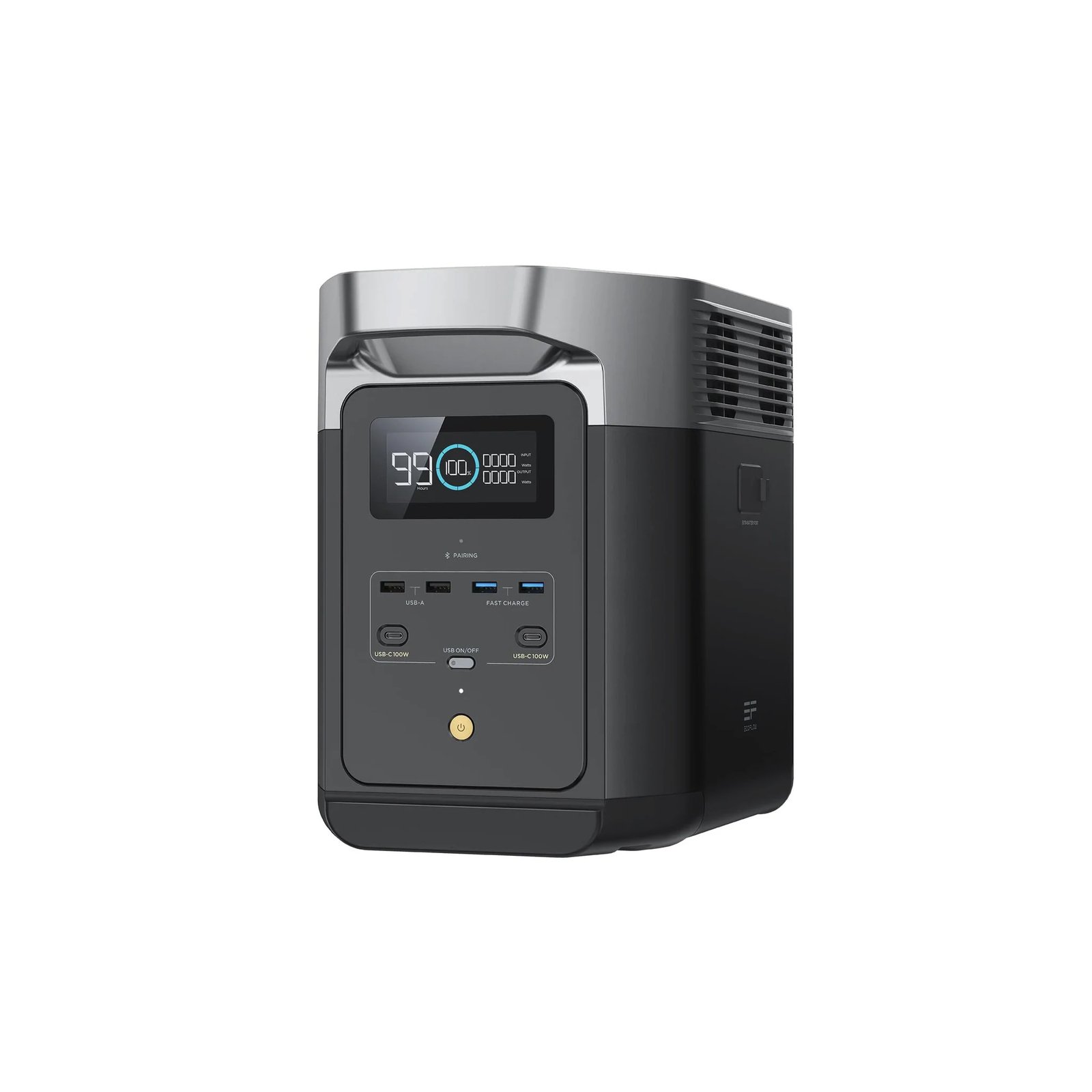
- EcoFlow DELTA 2: LiFePO4, 3,000 cycles to 80% capacity
- Jackery Explorer 1000 Pro: lithium-ion, 1,000 cycles to 80%+ capacity
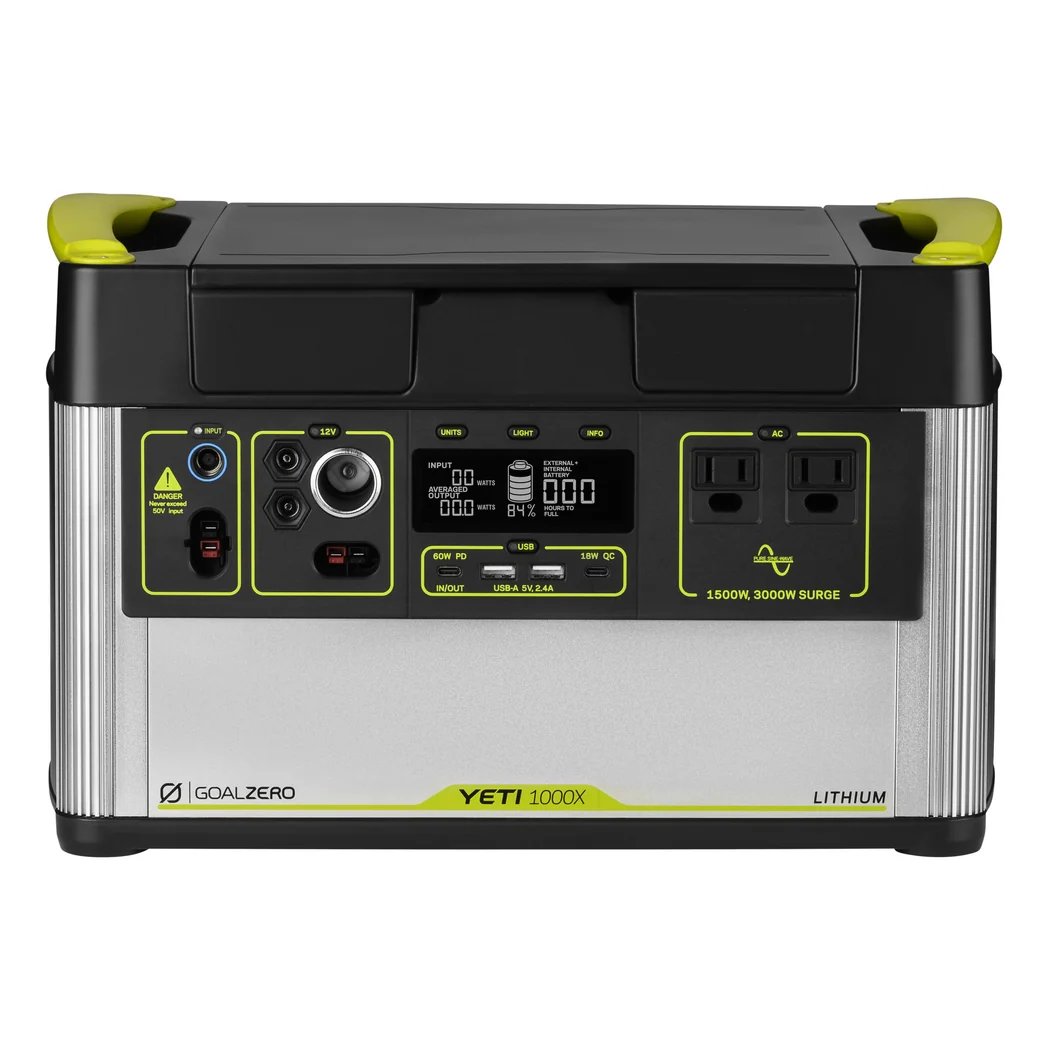
- Goal Zero Yeti 1000X: Li-ion NMC, 500 cycles to 80% capacity (at 1C discharge, 25°C, per Goal Zero’s published test conditions)
To put that in perspective: if you fully cycle a station once a week, 500 cycles is roughly 10 years — fine. But if you cycle it daily (off-grid cabin, daily job-site use), 500 cycles is under 18 months, while 3,000 cycles stretches past 8 years. Same usage pattern, wildly different product lifetimes.
Weight and energy density: where NMC still wins
NMC’s advantage is that it stores more energy per unit of weight. Compare two ~1,000Wh stations:
- Goal Zero Yeti 1000X (NMC, 983Wh): 31.7 lb
- EcoFlow DELTA 2 (LiFePO4, 1,024Wh): 27 lb
The gap has narrowed a lot — modern LiFePO4 packaging has largely erased NMC’s old weight advantage at this size. But at the chemistry level, NMC remains more energy-dense, which is why it dominates applications where every gram counts (drones, EVs, phones). For a box that sits in your garage or truck bed, the difference rarely decides anything.
Thermal stability and safety
LiFePO4 is widely regarded as the more thermally stable of the two — its thermal runaway threshold is higher, which is one reason it’s become the default for stationary storage and, increasingly, power stations. NMC is perfectly safe in a well-engineered product with a proper battery management system (every station listed here has one), but the chemistry itself is more energetic. This is a real but secondary consideration for most buyers; cycle life dominates the practical difference.
What about calendar life?
Cycles aren’t the whole story. Batteries also degrade sitting on a shelf. LiFePO4 generally ages more gracefully in storage, and manufacturers’ guidance reflects it — BLUETTI recommends recharging to 80% every 3–6 months for the AC180; Goal Zero gives the same 3–6 month guidance for the Yeti 1000X. In practice: if a station will sit in a closet for emergency use, either chemistry is fine as long as you follow the storage guidance. If it’ll work daily, LiFePO4’s cycle advantage compounds.
Cost: do you pay extra for LiFePO4?
Early on, yes. Today, mostly no — LiFePO4 has become the mainstream choice and pricing has converged. The DELTA 2 and AC180 (both LiFePO4, both ~1,000Wh+, both 1,800W) compete directly on price with NMC models in the same class. You’re no longer paying a premium for the longer-lived chemistry; in many cases it’s simply what the current generation ships with.
Which should you buy?
- Daily or heavy cycling (off-grid, job site, van life): LiFePO4, no contest. The 3,000+ cycle rating is the whole ballgame.
- Occasional use (a few camping trips a year, emergency closet): either works. At one cycle a month, even 500 cycles is 40 years — the electronics will die before the cells do.
- Buying used: chemistry matters enormously. A 3-year-old NMC station may have meaningfully degraded; a 3-year-old LiFePO4 station likely hasn’t. Ask for the cycle count if the app shows it.
The industry has already voted: nearly every new power station release uses LiFePO4. NMC persists mainly in older lineups (like the Yeti X series) that predate the shift. When comparing models, treat the cycle rating as the spec that predicts the product’s real lifespan — and if a sheet won’t name the chemistry, let the cycle number speak for it.
Related: What size power station do you need? The watt-hour math, explained · Solar panel pairing guide
1 thought on “LiFePO4 vs NMC Batteries in Power Stations: What the Chemistry Actually Changes”
Comments are closed.