
Disclosure: As an Amazon Associate, Wattovia earns from qualifying purchases. We research published specifications — we don’t run lab tests, and every number below comes from the manufacturer’s own spec sheet.
A portable power station without a recharge plan is a very expensive single-use battery. Solar is the obvious answer off-grid — but “solar compatible” on the box hides three separate limits, and exceeding any one of them means your panels quietly underperform (or the station refuses the input entirely).
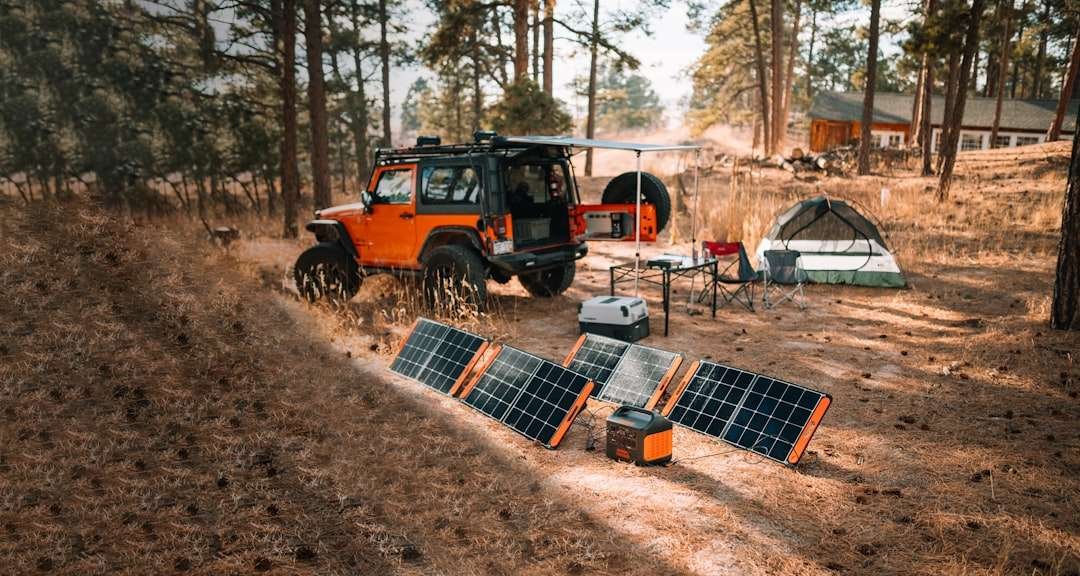
This guide covers the three numbers that govern solar charging, how to combine panels without breaking them, and what to realistically expect once the panels are in the sun.
The three limits: watts, volts, amps
Every power station publishes a solar input spec with three constraints. All three must be satisfied simultaneously:
1. Maximum watts. The ceiling on total solar power the station accepts. Feed it more and the extra is simply ignored (the charge controller clips it) — wasted panel, not damage, in most modern designs. But there’s no benefit to oversizing far beyond it.
2. Voltage range. The MPPT controller only operates within a published voltage window. Go under it and charging may not start; go over the maximum and you risk damaging the controller. This is the limit people violate most often.
3. Maximum current (amps). Less commonly the binding constraint, but it caps how panels can be wired in parallel.
Published examples:
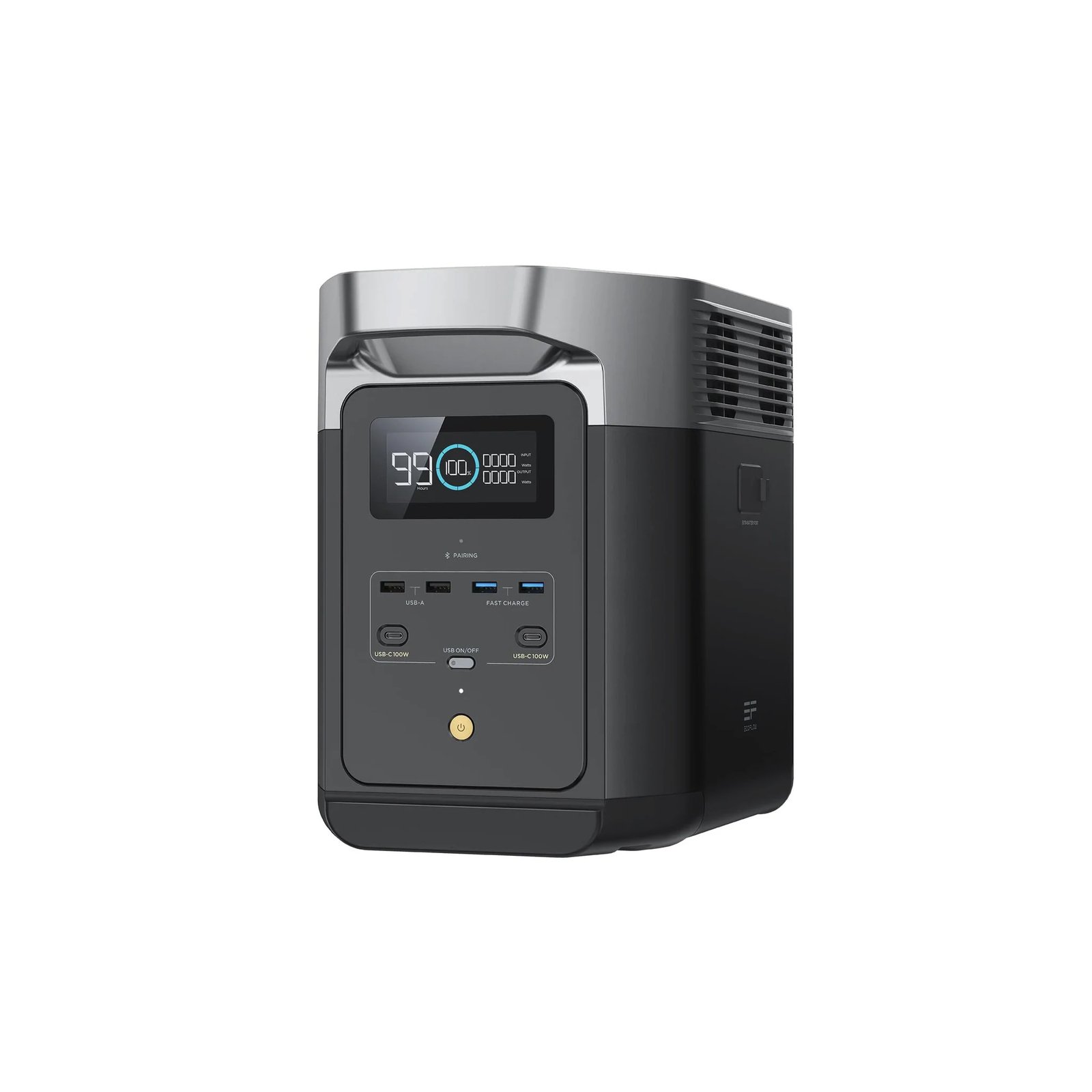
- EcoFlow DELTA 2: 500W max, 11–60V, 15A max (XT60 connector)
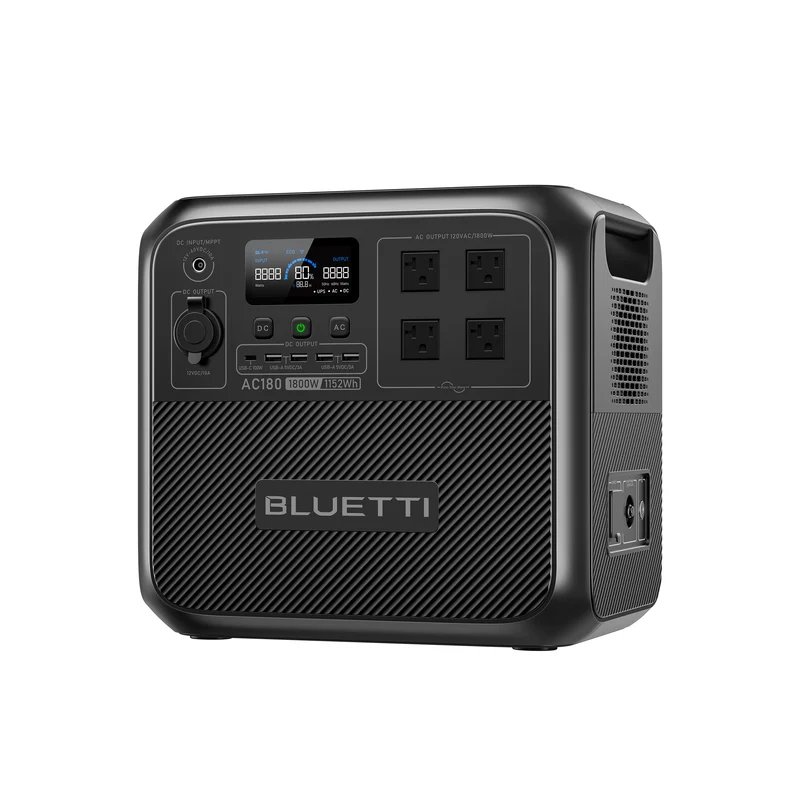
- BLUETTI AC180: 500W max, VOC 12–60V, 10A max
- Goal Zero Yeti 1000X: standard charging port 14–50V, 10A (150W max); high-power port 14–50V, up to 50A (600W max)
Series vs. parallel: the wiring decision
Solar panels can be chained two ways, and the choice is dictated by the voltage window above:
- Series (panel + to panel −): voltages add, current stays the same. Two 20V panels in series present 40V. Use series to reach the controller’s minimum voltage with small panels — but the combined open-circuit voltage (VOC) must stay under the station’s maximum. Cold mornings raise panel voltage, so leave margin.
- Parallel (all + together, all − together): current adds, voltage stays the same. Use parallel when voltage is already sufficient but you want more watts — staying under the max current rating.
Concrete check with the DELTA 2 (11–60V, 15A): two 220W panels with ~21V VOC each, wired in series, present ~42V VOC — comfortably inside the window — at ~10.5A, under the 15A cap. Total 440W, under the 500W ceiling. That combination works. Three of the same panels in series would hit ~63V VOC — over the 60V max. That combination doesn’t.
Always use the panel’s VOC (open-circuit voltage, the highest it produces), not its nominal or “max power” voltage, for the ceiling check. Spec sheets list both; the ceiling cares about VOC.
MPPT is doing the real work
Every station in this guide uses an MPPT (maximum power point tracking) charge controller rather than the older PWM type. MPPT continuously adjusts to extract the most power as sunlight and temperature shift — which is why a 500W array actually delivers something close to 500W at solar noon instead of far less. You don’t need to understand the algorithm; just know that the voltage window above is the MPPT’s operating range, and staying inside it is what lets it do its job.
Real-world output: derate your expectations
Panel wattage is rated under lab conditions (1,000 W/m² irradiance, 25°C cell temperature) that you will rarely see. In practice:
- Expect 70–80% of rated watts in good direct sun with proper tilt.
- Heat, haze, suboptimal angle, and partial shade all pull it down further.
- A “500W” array therefore recharges a 1,000Wh station in roughly 2.5–3.5 hours of strong sun — not the 2 hours the lab math suggests.
This derating is also why slightly oversizing the array (within the wattage ceiling) is sensible: a 500W-max station fed by 500W of panels will rarely see the full 500W, so you’re not really “wasting” headroom.
Connectors and cables
The unglamorous part that stops first-time setups cold. Common solar input connectors include XT60 (EcoFlow), DC7909 / 8mm barrel (older Goal Zero and Jackery), and Anderson Powerpole (high-current inputs). Panels typically terminate in MC4 connectors. You will almost certainly need an MC4-to-[your station’s input] adapter cable — manufacturers sell them, and third-party ones exist, but verify the polarity and gauge before buying. Undersized cable over a long run wastes power as heat; keep solar cable runs as short as practical.
Can you mix panel brands?
In series: only if the panels have closely matched current ratings — the string is limited by the weakest panel, and mismatches waste output. In parallel: only if voltages match closely. The safe default is identical panels. Mixing a 100W panel with a 200W panel in series gives you roughly 200W of a 300W array’s potential, not 300W.
A sane starter setup
For a ~1,000Wh station with a 500W solar ceiling (DELTA 2, AC180): two 200–220W rigid or portable panels, wired in series, kept within the voltage window, on an MC4-to-XT60/DC7909 adapter. That yields ~300–350W real-world — a full recharge in about 3 hours of good sun, and a genuinely sustainable daily cycle for moderate loads.
Related: What size power station do you need? The watt-hour math, explained · LiFePO4 vs NMC batteries, explained