
Disclosure: As an Amazon Associate, Wattovia earns from qualifying purchases. We research published specifications. We do not run lab tests, and every product number below comes from the manufacturer’s own spec sheet.
Shop for backup power and you will meet two names for what looks like the same box. One listing calls it a portable power station. Another listing calls the same kind of box a solar generator. The photos look alike, the outlets look alike, and the prices often overlap. Shoppers reasonably ask whether they are looking at two different kinds of machines.
Most of the time, they are not. A solar generator is usually a portable power station sold with solar panels, or sold as a station that can charge from solar panels. The name describes how the box can be charged, not a different way of making power. Once you know what each part does, the label stops being confusing and starts being useful, because it tells you to check whether panels are actually included and how fast they can refill the battery.
The short answer
A portable power station is a rechargeable battery with an inverter, a charger, and outlets built into one box. You charge it from a wall outlet, a car outlet, or solar panels, then you draw the stored energy back out through its AC outlets, DC ports, and USB ports.
A solar generator is that same kind of box when it is bundled with solar panels, or when the seller is stressing that it can recharge from the sun. The box itself still stores energy. It does not create energy out of sunlight on its own. The panels do the collecting, the battery does the storing, and the inverter turns stored DC power into the AC power that household devices use.
That distinction matters at checkout. A listing titled solar generator may include panels, or it may include only the station with a note that panels are sold separately. Two listings can share the same headline style and contain different things in the box. The spec sheet and the “in the box” list settle the question, not the title.
What a power station actually contains
Four parts do nearly all the work, and every honest listing should let you identify each one.
First, the battery. Capacity is measured in watt-hours, written as Wh. That number tells you how much energy the box holds. A 1,000 Wh station holds roughly twice the energy of a 500 Wh station, before conversion losses. Output is measured in watts, written as W. That number tells you how much power the box can deliver at one moment, which decides whether it can start and run a given device.
Second, the inverter. It converts the battery’s DC power into AC power for wall-style outlets. Most modern stations use a pure sine wave inverter, which is the type that suits sensitive electronics and motor-driven devices. If a listing does not state the inverter type, ask before buying, because it affects what you can safely plug in.
Third, the charge controller. When solar panels connect, a controller manages the flow into the battery. Many stations use an MPPT controller, which adjusts to pull more usable power from the panels as sunlight changes. The controller also sets the solar input limit, which caps how much panel wattage the station can accept at once.
Fourth, the ports. AC outlets run household devices. USB-C and USB-A ports charge phones and laptops. A 12V car-style port and DC barrel ports suit fans, lights, and some camping gear. Port counts matter less than whether the ports you actually need are present and whether the total output covers your largest device.
Take the EcoFlow DELTA 2 as a concrete example. Its published specs list 1,024 Wh of LiFePO4 battery capacity and 1,800 W of AC output. That pairing tells you two separate facts: how long it can run a load, and how large a load it can run. Neither number alone describes the whole machine.
Where the word generator came from
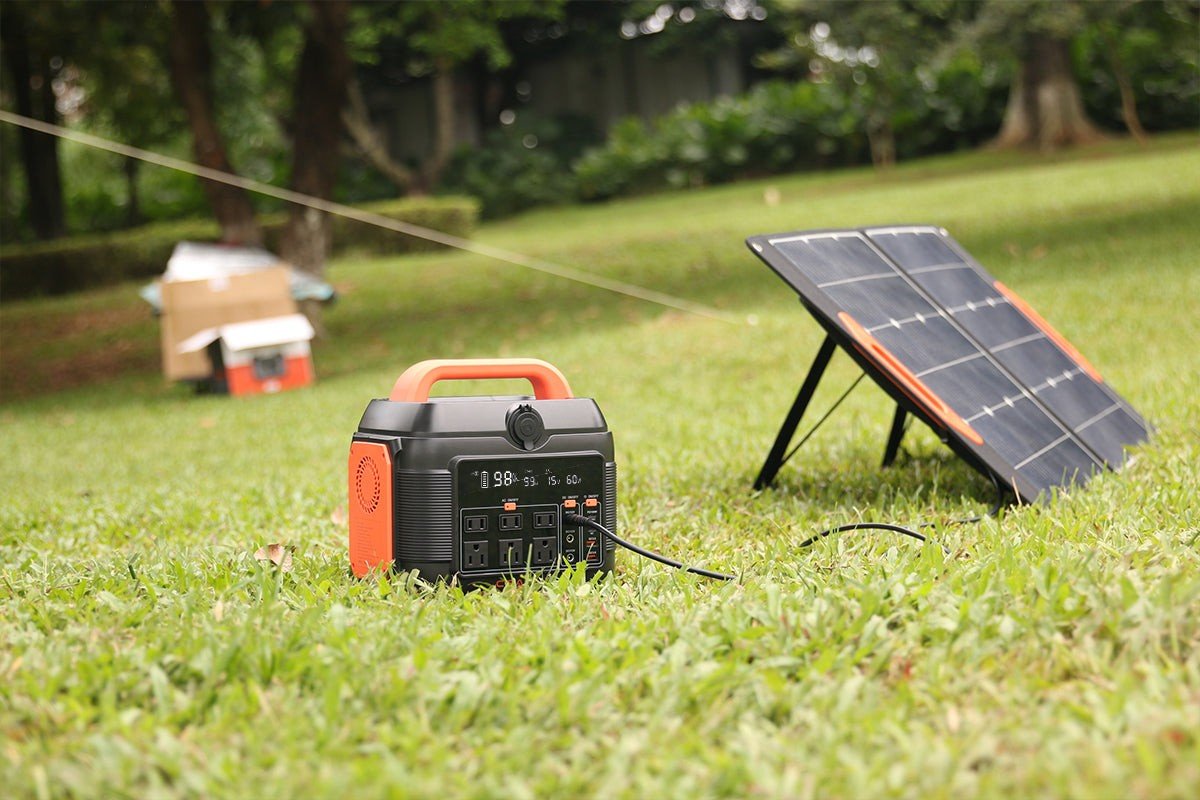
The word generator came from the product it replaces in shoppers’ minds. For decades, backup power meant a gas generator: an engine that burned fuel and produced electricity for as long as the tank lasted. When battery stations arrived, sellers needed a name that told buyers “this box does the job a generator did.” Solar generator did that job well. It sounded familiar, it sounded clean, and it put the charging method in the name.
Search habits kept the name alive. People who want quiet, fume-free backup power search for solar generators, so sellers label battery stations that way to be found. The name is now a shopping category as much as a technical description. That is why the same station can appear under both names on different stores, and why comparing listings by title alone leads to confusion.
The name also hides a real difference in how the two machines behave. A gas generator keeps producing power while it has fuel, which makes it suited to long outages where refueling is possible. A battery station runs until its stored energy is used, then it needs recharging. Solar panels stretch that stored energy during daylight, but they do not turn a battery station into a machine that produces power without limit. Our comparison of a portable power station and a gas generator walks through runtime, noise, and upkeep side by side.
Three things the label hides
The panels may not be in the box
The most common surprise is also the easiest to avoid. Some solar generator listings bundle one or two panels with the station. Others sell the station alone and use the name because the station accepts solar charging. A third group sells the station and the panels as a bundle with a single price, which can look like one product until you read the contents list.
Before you pay, check three lines on the listing: what is in the box, the total panel wattage if panels are included, and whether the solar charging cable is included or sold separately. If any of those lines is missing, treat the listing as incomplete and compare it with one that states them plainly.
Panel wattage and solar input are different numbers
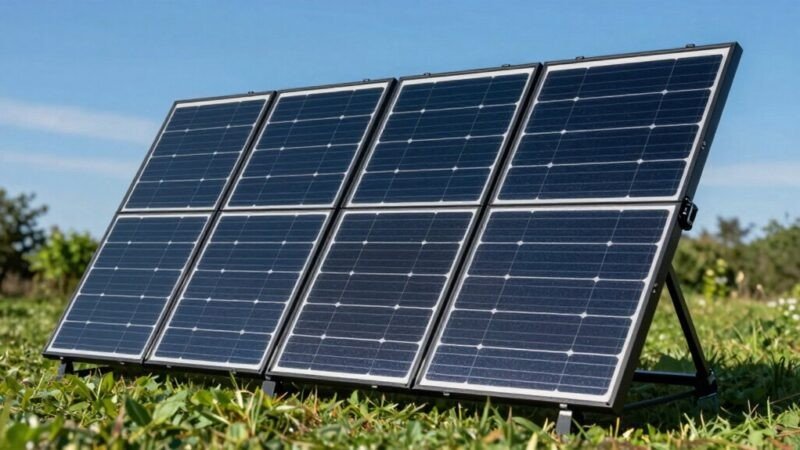
Panel wattage says how much power the panels can produce in full sun. Solar input says how much power the station can accept from panels. The smaller of the two sets the real charging speed, and the station’s input limit wins when the panels could produce more than the station accepts.
Suppose a station accepts 500 W of solar input and you connect 800 W of panels. The station will take at most its 500 W limit, so the extra panel capacity does not speed up charging in full sun. The extra panels can still help in weak light, when each panel produces less than its rating, but they will not beat the input cap at midday. Our solar pairing guide explains how to match panel wattage to a station’s input limit.
Sunlight does not refill a battery at the label rate
Panel ratings assume strong, direct sun on a cool panel aimed at the sun. Real charging is slower. Clouds, heat, shade, panel angle, and conversion losses all reduce the energy that reaches the battery. A panel that carries a 200 W rating may deliver well under that figure for much of the day, and it delivers nothing at night.
That gap is normal, and it is why solar charging works best as a slow refill across a day rather than a fast recharge between uses. If your plan depends on solar alone during an outage, size the panels and the battery for a cloudy day, not a perfect one, and keep a wall-charging backup plan for the first charge.
How to read a solar generator listing
Ignore the headline for a minute and read the listing in this order. Each answer removes one way the name can mislead you.
Capacity in watt-hours comes first, because it decides runtime. Divide capacity by the watts your device draws to get a rough runtime in hours, then trim the result for conversion losses. A 1,000 Wh station running a 100 W load gives roughly ten hours in perfect math and somewhat less in practice. Our sizing guide works through this math for fridges, fans, and phones.
Output in watts comes second, because it decides which devices can run at all. Check both the continuous output and any short surge rating. A device with a motor, such as a fridge compressor, can draw a brief surge above its running watts when it starts. If the station’s surge rating does not cover that spike, the device may shut the station down even when the running watts look fine.
Solar input in watts comes third. This is the cap on solar charging speed. Compare it with the panel wattage in the bundle, if any. A bundle with far more panel wattage than the station accepts is not automatically a bad deal, since extra panels help in weak light, but it should not be sold as proportionally faster charging.
Battery chemistry comes fourth. LiFePO4 batteries generally last for many more charge cycles than older lithium chemistries, and they hold up better to regular deep use. NMC batteries can pack more energy into a smaller, lighter box, which suits carrying. Our battery chemistry guide compares the trade-off in detail, including cycle life and weight.
Finally, read the bundle contents and the warranty. Panels, cables, and carry cases are sometimes shared across bundle versions with different prices. A longer warranty on the battery than on the panels is common, and it is worth knowing before you buy.
The BLUETTI AC180 shows how the same checks apply across brands. Its published specs list 1,152 Wh of LiFePO4 capacity and 1,800 W of AC output. As with any station, the useful questions are the same: which panels, if any, come in the box, what solar input the station accepts, and how the bundle price compares with buying the station and panels separately.
A worked example with sunlight
Rough math keeps expectations honest. Take a station with 1,000 Wh of capacity and a single 200 W panel. In five hours of strong sun, the panel could produce about 1,000 Wh in perfect conditions, since 200 W times five hours equals 1,000 Wh. Real conditions cut that figure. With clouds, heat, and conversion losses, a full day of charging might return half to three quarters of the perfect figure, and a poor day returns far less.
That math leads to a practical rule. For camping and short outages, a panel near the station’s input limit refills a meaningful share of the battery each sunny day. For running a fridge around the clock, solar alone rarely keeps up unless the panel array is large and the days are sunny, because the fridge draws power all night while the panels rest. In that case, treat solar as a way to stretch the battery and delay the next wall charge, not as a promise of endless power.
Night use shows the other side of the same point. Once the sun sets, everything runs from stored energy alone. Lights, phones, and a fan draw little, so a station can carry a campsite through the night with ease. Larger loads need a larger battery, and that need is set by watt-hours, not by the word on the box.

When the label helps, and when it misleads
The label helps when it points you toward a bundle that fits a real plan. If you want to charge a station at a campsite with no wall outlet, a bundle with panels and the right cables saves a second purchase and a compatibility check. If you want backup power for a home outage and you have roof or yard space for panels, a solar-ready station gives you a refill path when the grid stays down.
The label misleads when it suggests the box makes its own power without limit, or when it hides that panels are missing. It also misleads when a bundle pairs a small station with large panels, or a large station with a token panel that cannot refill it in a useful time. In both cases the fix is the same: read capacity, output, solar input, and bundle contents, and let those four numbers speak louder than the headline.
One more check belongs on every shortlist. Confirm that the station’s solar input connector matches the panels, or that an adapter is included. Most bundles handle this, but mixing brands can introduce a connector mismatch that delays a trip or an outage setup. A five-minute check before ordering beats a return later.
The bottom line
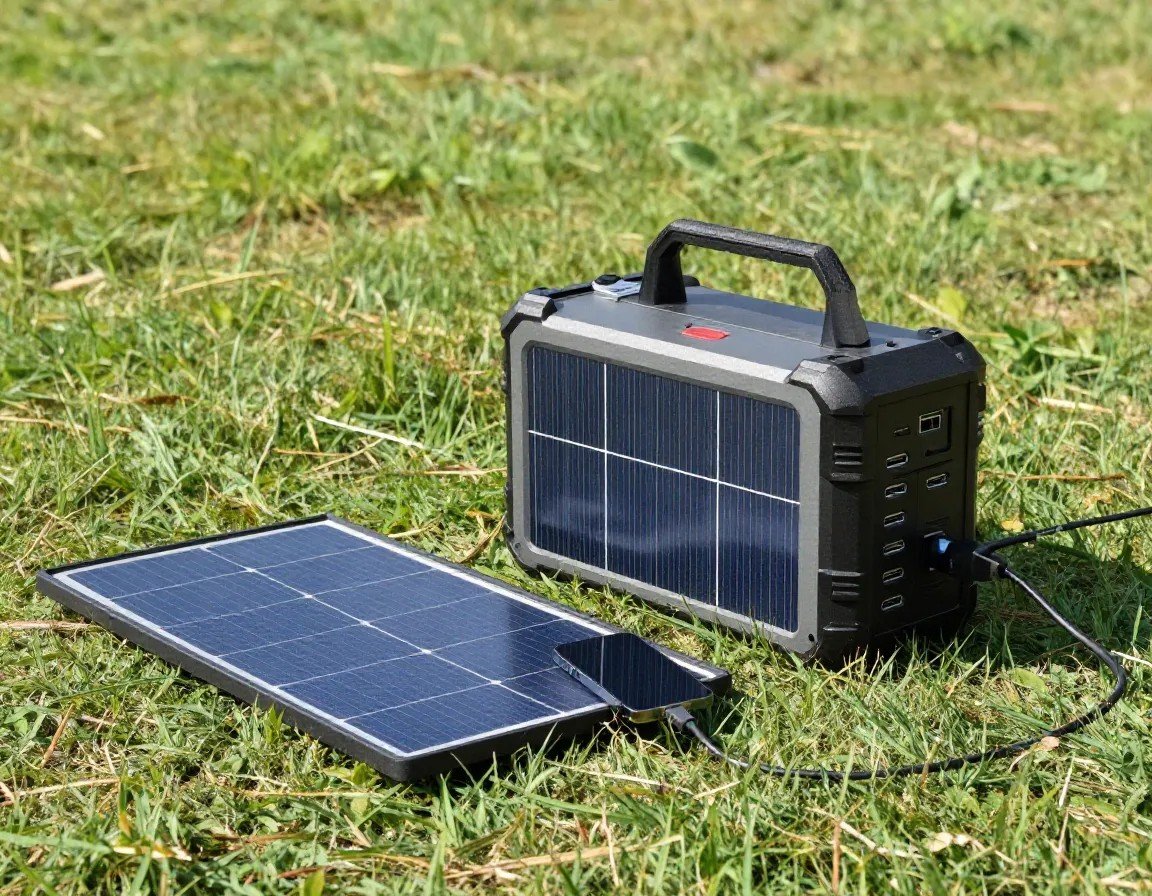
A solar generator and a portable power station are usually the same kind of machine wearing different labels. The station stores energy. The panels collect it. The inverter delivers it. When a listing uses the solar generator name, treat it as a prompt to check the bundle: are panels included, how many watts do they carry, what solar input does the station accept, and which battery chemistry sits inside?
Answer those four questions and the name stops mattering. You will know how long the box runs, what it can power, how fast the sun can refill it, and what else you still need to buy. That is the whole difference the label was trying to describe, stated in numbers you can compare across every listing.
If you are comparing stations to buy as a solar bundle, start with the two examples above: check price on Amazon for the EcoFlow DELTA 2, and check price on Amazon for the BLUETTI AC180. Compare their capacity, output, and solar input against the bundle contents before choosing, and use the sizing and pairing guides linked above to match the station to the loads you actually run.