
Disclosure: As an Amazon Associate, Wattovia earns from qualifying purchases. We research published specifications. We do not run lab tests, and every product number below comes from the manufacturer’s own spec sheet. The runtime figures are worked examples based on stated assumptions, not test results.
When the power goes out, the fridge is usually the first appliance people worry about. Food spoils, ice melts, and a full grocery run can be lost in a day. A portable power station can keep a fridge running, but for how long depends on two numbers that have little to do with each other: how much energy the station stores, and how much energy the fridge actually uses over time.
The short version is that a mid-size station in the 1,000 watt-hour class can often carry a modern full-size fridge roughly overnight, while a smaller station may only cover a few hours. A larger station, or one refilled by solar panels during the day, stretches that window further. The rest of this guide shows the math for your own fridge and station.
The formula in one line
Runtime in hours equals usable energy divided by average power draw. In symbols, that is usable watt-hours divided by average watts. Capacity alone does not give you runtime, because a station never delivers every watt-hour on its label to the fridge. Conversion from stored DC power to household AC power loses some energy as heat, and the station itself uses a little power to run its inverter, display, and cooling fan.
For planning, use 85 percent of the labeled capacity as usable energy. That is a planning factor, not a measured efficiency figure for any particular station. If a station is labeled 1,024 watt-hours, planning on about 870 usable watt-hours keeps expectations honest. Some stations will do a little better and some a little worse, but a plan built on the full label number will run short.
The second number, average watts, is where most estimates go wrong. A fridge does not draw its rated power all the time. Its compressor cycles on and off as the cabinet temperature changes. A fridge that draws 150 watts while the compressor runs might average only 60 watts across an hour if the compressor runs for about 24 minutes of that hour. The label on the back of the fridge usually lists running watts or amps, and the energy guide label lists yearly energy use. Both help, and neither tells the whole story on its own.
Find your fridge average watts
There are three practical ways to get a usable average, in order of accuracy. First, a plug-in power meter gives the best answer. Plug the fridge into the meter for a full day, read the total watt-hours used, and divide by 24. A fridge that used 1,200 watt-hours in a day averages 50 watts. A fridge that used 2,400 watt-hours in a day averages 100 watts. This single measurement beats every rule of thumb in this guide.
Second, the yellow energy guide label on a new fridge states estimated yearly energy use in kilowatt-hours. Divide that figure by 365 for daily watt-hours, then by 24 for average watts. A fridge rated at 438 kilowatt-hours per year uses about 1,200 watt-hours per day, averaging 50 watts. A fridge in a hot garage or opened constantly will use more.
Third, if you have neither a meter reading nor an energy guide figure, use a planning range and accept the uncertainty. A modern full-size fridge often averages somewhere between 50 and 100 watts across a day. An older or larger side-by-side model can average more, especially in a warm room. A small dorm fridge or a 12 volt car fridge usually averages far less, often in the 30 to 50 watt range. Pick the top of the range for outage planning, because a plan that assumes the best case fails first.
Worked examples for a full-size fridge
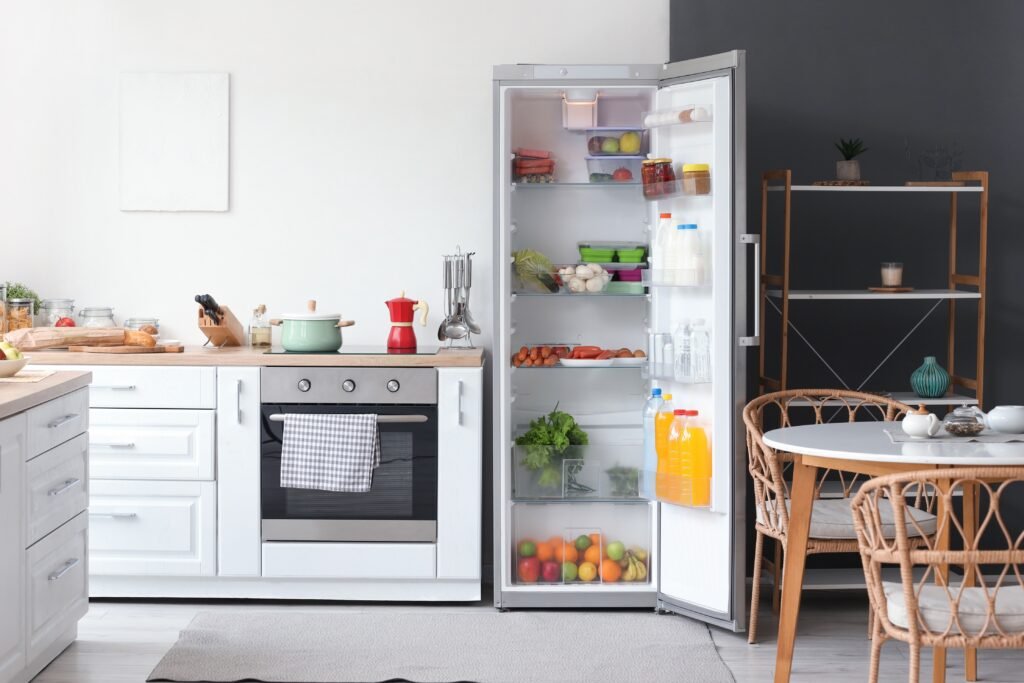
Take a station with 1,024 watt-hours of labeled capacity and a fridge averaging 100 watts. Usable energy at the 85 percent planning factor is about 870 watt-hours. Divide 870 by 100 and you get about 8.7 hours. That is a realistic planning figure for a full-size fridge on a mid-size station, before you add anything else to the station.
If the same fridge averages 50 watts instead, because it is efficient and the room is cool, the same station gives about 17.4 hours. The station did not change. The fridge average halved, so the runtime doubled. This is why two households with the same station can report very different results, and why a single answer to “how long” is misleading without the fridge figure beside it.
The table below applies the same math to three station sizes, at two fridge averages. All figures use the 85 percent planning factor and assume the fridge is the only load on the station.
| Station capacity | Usable energy at 85 percent | At 100 watts average | At 50 watts average |
|---|---|---|---|
| 500 watt-hours | 425 watt-hours | About 4.3 hours | About 8.5 hours |
| 1,000 watt-hours | 850 watt-hours | About 8.5 hours | About 17 hours |
| 2,000 watt-hours | 1,700 watt-hours | About 17 hours | About 34 hours |
Read the table as a planning range, not a promise. A fridge opened often, a warm room, and warm food loaded after a shopping trip pull the result toward the short end. A cool room and a fridge kept closed pull it toward the long end. Our sizing guide walks through the same division for phones, fans, and lights, so you can size a station for a whole outage kit.
The startup surge problem
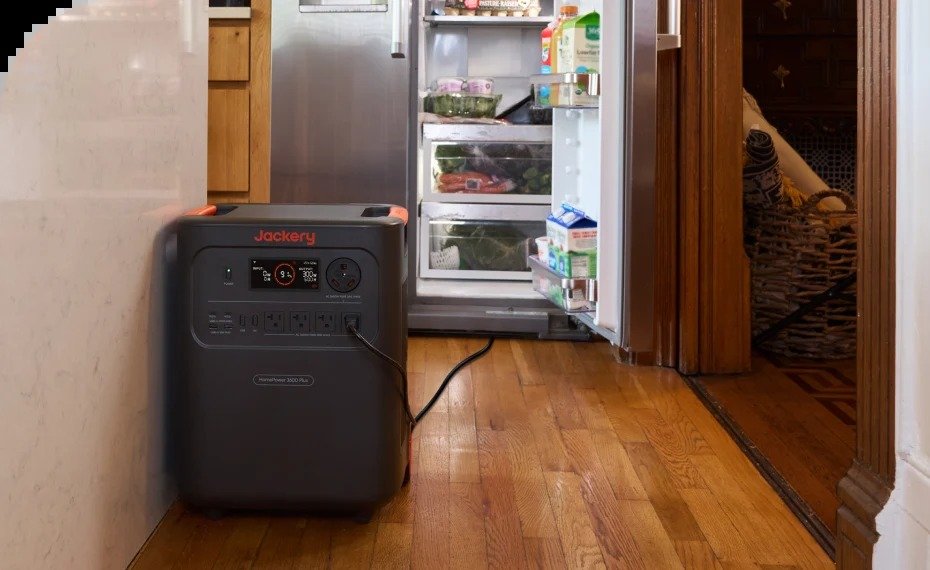
Average watts decide runtime, but surge watts decide whether the fridge runs at all. When a fridge compressor starts, it can draw several times its running watts for a second or two. A fridge that runs at 150 watts might briefly demand 600 watts or more at startup. If the station cannot supply that brief spike, it may shut down its AC output even though the running watts look comfortable.
Check two numbers before you buy. First, the station continuous AC output in watts, which must cover the fridge running watts with room to spare. Second, the station surge rating in watts, which must cover the compressor startup spike. The surge rating is sometimes listed separately in the spec sheet, and it is easy to miss when a listing leads with capacity. If the fridge manual or rating plate does not state a startup figure, a plug-in meter with a peak reading, or the fridge manufacturer support line, can usually supply it.
As a concrete example, the EcoFlow DELTA 2 lists 1,024 watt-hours of capacity and 1,800 watts of continuous AC output in its published specs. That output figure gives a wide margin above a typical fridge running load and its startup spike, which is the point of the check: capacity sets how long the fridge runs, while output sets whether it starts cleanly in the first place. A station with a large battery and a small inverter can fail the second test even when the first test looks fine.
What changes the answer in real outages
Every extra load shortens fridge runtime
A station powering a fridge plus a phone charger, a router, and a lamp is splitting its usable energy across all four loads. The math still works, but you must add the average watts of every load together before dividing. A fridge averaging 60 watts plus a router at 10 watts plus a lamp at 10 watts totals 80 watts average. On an 870 usable watt-hour station, that combination gives about 10.9 hours, not the 14.5 hours the fridge alone would give. During a long outage, the practical move is to run the fridge on the station and charge phones from a separate small battery bank, so the fridge number stays clean.
Temperature and door openings matter more than people expect
A fridge in a 90 degree garage works harder than the same fridge in a 70 degree kitchen, because heat leaks into the cabinet faster and the compressor cycles more often. Every door opening lets cold air out and warm air in, which adds another compressor cycle. During an outage, keeping the fridge door closed extends runtime in a way no station upgrade can match, since the station is maintaining a temperature rather than pulling a warm cabinet down.
Solar panels change the shape of the answer
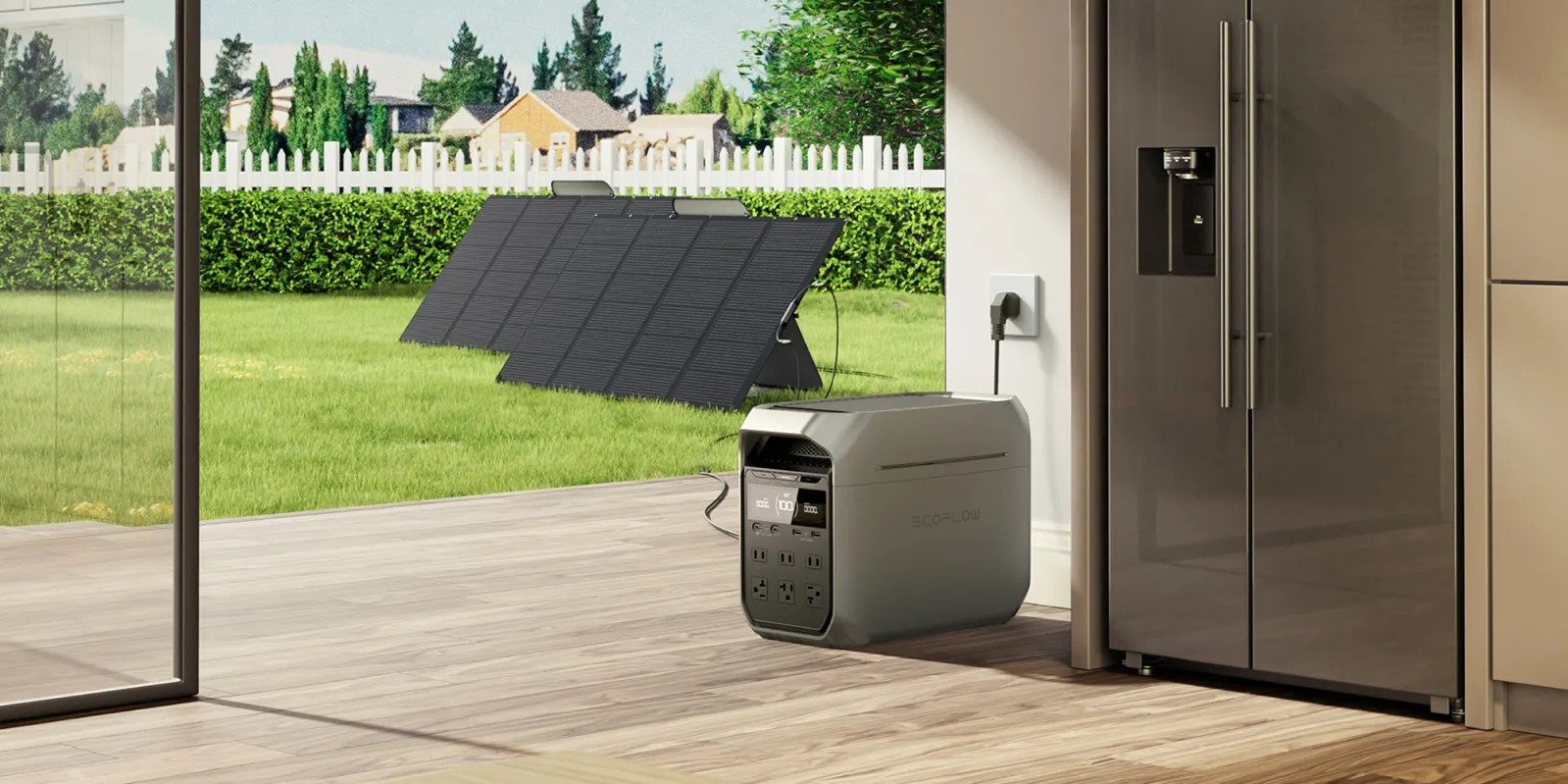
A station charging from solar panels during the day does not give a single runtime figure. It gives a daily balance: energy used by the fridge across 24 hours against energy refilled by panels during daylight. If the panels refill roughly what the fridge used, the station can carry the fridge through a multi-day outage, with the battery covering the night and the panels covering the day. If the panels refill only half of daily use, the battery drains a little further each day until it runs out.
Take a fridge using 1,200 watt-hours per day and panels delivering 600 usable watt-hours on a sunny day. The station starts full at 1,024 watt-hours, ends the first day at about 424 watt-hours, and runs out during the second day. On a cloudy week it refills far less and runs out sooner. Our solar pairing guide explains how panel wattage, angle, and a station solar input limit set that daily refill figure, and our guide to the solar generator name explains what a bundle labeled that way actually includes.
Smaller fridges and camping fridges
The same formula gives a much longer answer for smaller cooling. A 12 volt car fridge that averages 40 watts draws 960 watt-hours in a full day. On an 870 usable watt-hour station, that is about 21.8 hours, close to a full day, and a station refilled by a modest panel during daylight can hold that pace across a camping trip. A dorm fridge averaging 30 watts stretches the same station past a full day. This is why a station that looks small for a house fridge can be generous for a camping fridge, and why the fridge figure must come first in any sizing decision.
The BLUETTI AC180 shows the same checks at a slightly larger size, with published specs listing 1,152 watt-hours of capacity and 1,800 watts of AC output. At the 85 percent planning factor, that is about 979 usable watt-hours. For a fridge averaging 50 watts, that gives about 19.6 hours with the fridge as the only load. For a fridge averaging 100 watts, it gives about 9.8 hours. The comparison with the smaller station above is useful because it shows how a capacity increase of about 12 percent moves runtime by the same proportion, no more and no less.
How to size a station for your fridge
Work backwards from the outage you are planning for. First, measure or estimate your fridge average watts using the methods above. Second, decide how many hours of fridge runtime you need, such as 12 hours overnight, 24 hours for a day-long outage, or several days with solar help. Third, multiply average watts by hours to get the usable energy you need, then divide by 0.85 to get the labeled capacity to shop for.
As an example, a fridge averaging 75 watts for 24 hours needs 1,800 usable watt-hours. Dividing by 0.85 gives about 2,118 watt-hours of labeled capacity. That points to a large station or a station plus an add-on battery pack, not a mid-size station alone. If that size is out of reach, the honest alternatives are a shorter runtime target, a smaller second fridge for perishables, or solar panels that refill part of the daily use. Buying a station and hoping it stretches is the one option that fails quietly, when food is already at risk.
Also check output and surge ratings against the fridge, as described above, and battery chemistry if the station will sit in storage between outages. Our battery chemistry guide compares cycle life and storage behavior, and our comparison with gas generators covers outages longer than any battery plan, since a gas generator refuels while a battery station must be recharged.
Mistakes that shorten runtime
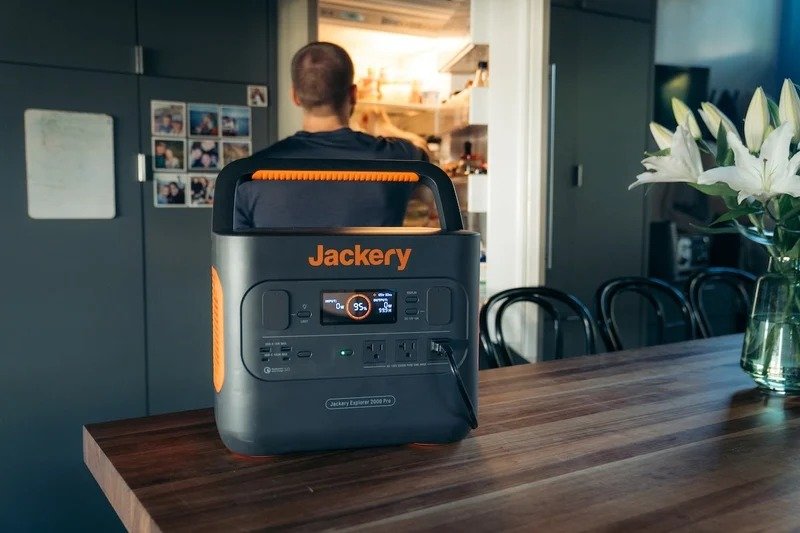
The most common mistake is dividing labeled capacity by running watts instead of average watts. A fridge rated at 150 watts running does not draw 150 watts all day, so that division understates runtime. The opposite mistake is dividing labeled capacity by a low average while ignoring conversion losses, which overstates runtime. Using average watts and the 85 percent planning factor together avoids both errors.
The second mistake is forgetting the surge check. A station that shuts down at the first compressor start gives zero hours of runtime, however large its battery is. The third mistake is adding loads after sizing. A fridge plan made in isolation stops working the moment a freezer, a fan, and a television join the same station. Size for the full load list, or keep the fridge on its own station during the outage.
The fourth mistake is trusting a solar refill figure from a perfect day. Panels rated in full sun deliver less on cloudy days, in winter, and at a poor angle, and they deliver nothing at night. Size the battery for the night and for at least one poor solar day, and treat a sunny day as a bonus rather than the plan.
The bottom line
How long a power station runs a fridge comes down to usable watt-hours divided by the fridge average watts, with a surge check before either number matters. A 1,000 watt-hour class station gives roughly 8 to 17 hours for a full-size fridge, depending on whether that fridge averages 100 watts or 50 watts, and a 2,000 watt-hour class station roughly doubles those figures. Measure your fridge for a day if you can, use the 85 percent planning factor, keep other loads off the fridge station, and check solar refill against a cloudy day rather than a perfect one.
If you are comparing stations for fridge backup, start with the two examples above: check price on Amazon for the EcoFlow DELTA 2, and check price on Amazon for the BLUETTI AC180. Work out your fridge average watts first, then compare capacity, output, and surge ratings against the runtime you actually need.